

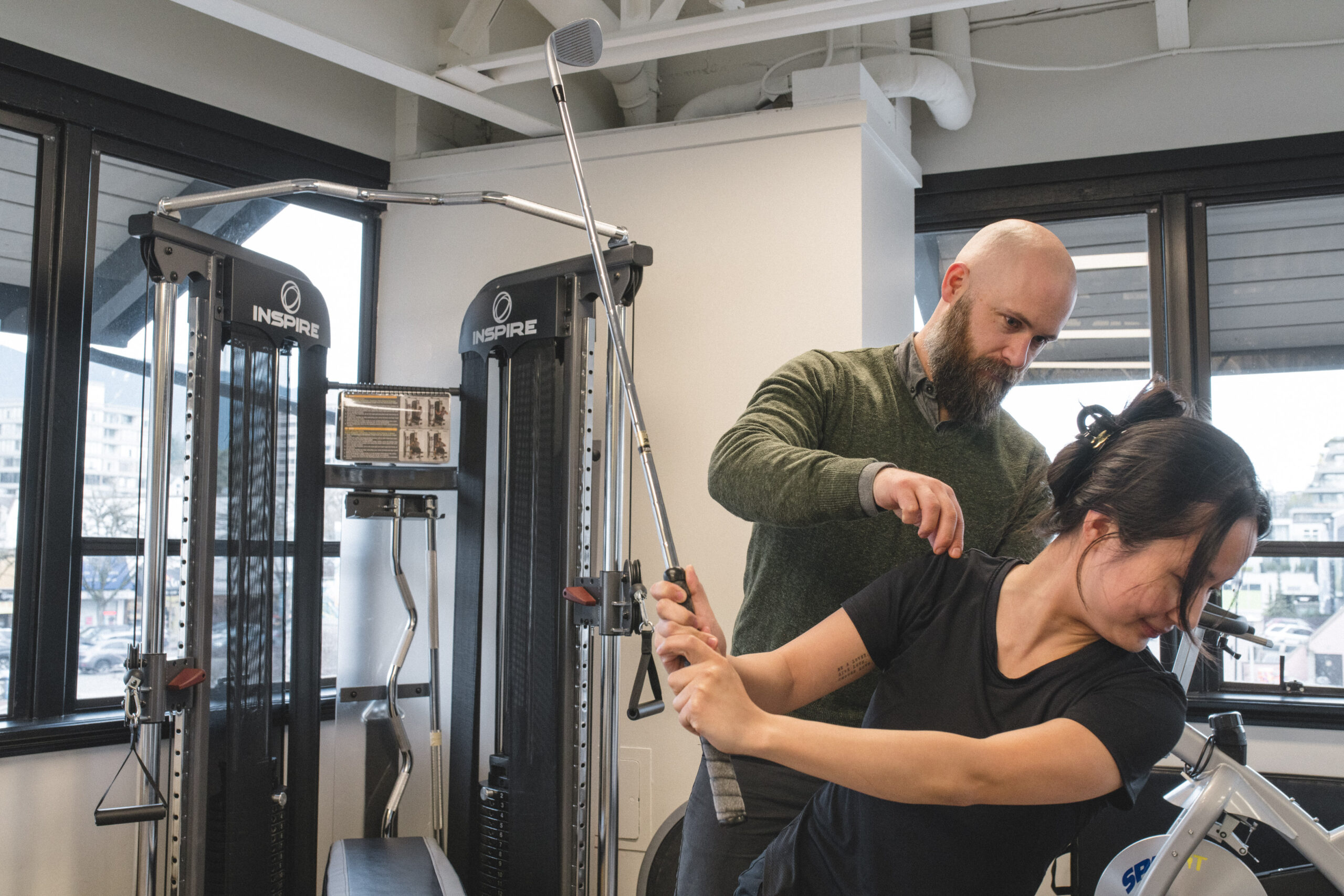
Thoracic spine mobility—the ability to rotate, extend, and flex through your upper back—is often the missing link in athletic performance. It’s not just about posture. For rotational athletes like golfers, baseball players, and tennis players, the thoracic spine is the transmission that connects power from your legs to your swing.
What Happens When Your Thoracic Spine is Locked Up?
A stiff thoracic spine leads to compensations:
-
Your lower back over-rotates (hello, back pain).
-
Your shoulders strain to make up for lost movement (cue impingements and labral issues).
-
You lose power and control in your swing, throw, or serve.
Thoracic Mobility and the Kinematic Sequence
In golf and other rotational sports, power is generated through a precise sequence:
-
Hips rotate
-
Then the thoracic spine
-
Then the shoulders
-
Then the arms/hands
If your thoracic spine can’t rotate smoothly, you’ll lose both efficiency and explosiveness.
How We Train and Treat Thoracic Function at Impulse
At Impulse Sport Therapeutics, our clinicians don’t just assess pain—we assess movement quality. At both Port Moody and West Vancouver, we use:
-
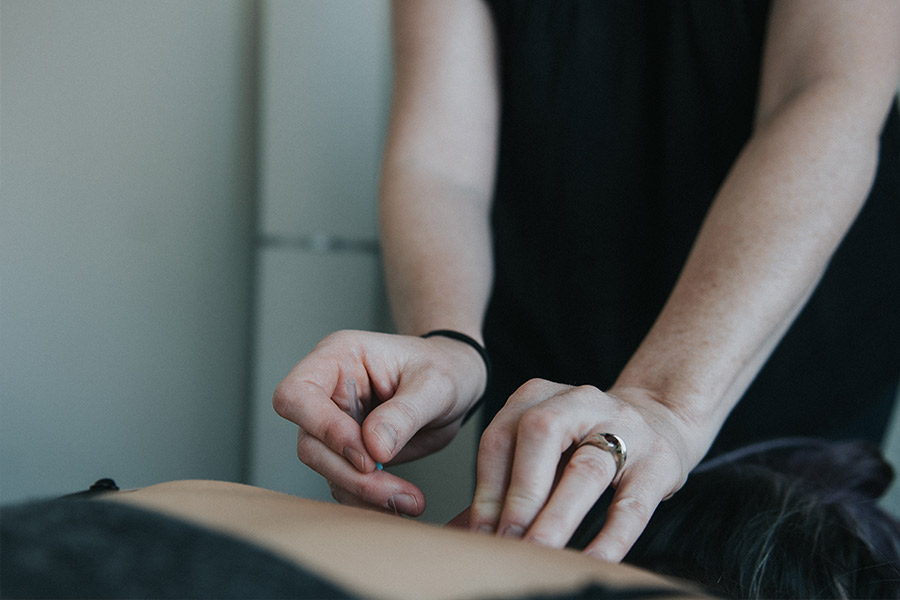
Manual therapy to mobilize the thoracic joints and ribs
-
Targeted corrective exercises for spinal rotation and extension
-
Breathing techniques to support ribcage mobility
-
Functional training to re-integrate movement into athletic patterns
Don’t Let a Stiff Spine Limit Your Game
Thoracic mobility is a performance multiplier and injury-prevention tool. Whether you’re a competitive athlete or just want to move better and feel younger, our integrated team is ready to help.